The Birmingham Baptist Churches exploring their Black History research project aims to help churches re-narrate their church histories in order to acknowledge the largely overlooked experiences and contributions of the first Black church members (men and women), first Black deacons (men and women), first Black pastors (men and women) in the Baptist Union of Great Britain’s churches.
It is members of these Baptist churches who are enlisted as part of the project, to act as co-researchers to engage with key historical documents and oral histories in order to construct, reflect on, and share short biographies on these key historical Black Baptist figures.
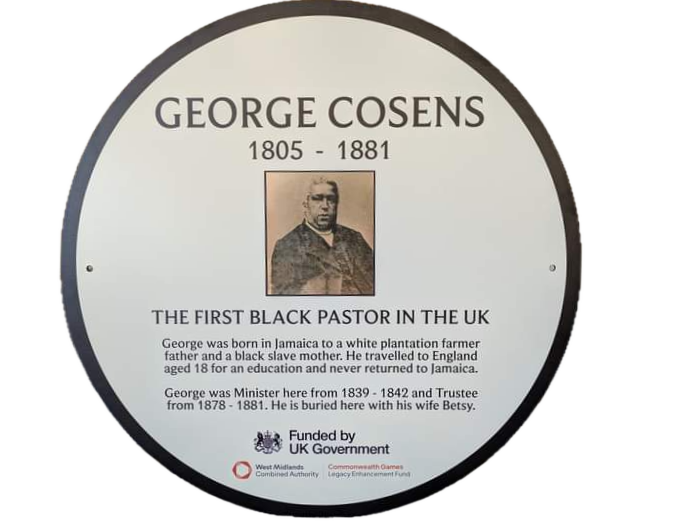
The project focuses on seven Baptist churches in Birmingham, to build on the work that has already been undertaken in the West Midlands to uncover the earliest known Black person to hold pastoral charge of any church of any denomination in Britain as a whole – Revd George Cosens who served as minister at Cradley Heath Baptist Church from 1837 – and specifically in Birmingham – Revd Peter Stanford who served as minister at Hope Street Baptist Church, Birmingham (the forerunner of Highgate Baptist Church) from 1889.
Questions that lie at the heart of this research project include:
- What were the historical congregational responses to these key Black figures? What theology underpinned these responses?
- What were the historical responses of these Black figures to how they were received? What theology underpinned their responses?
- What can be learned from these historical responses and related theological insights for building a more inclusive Church and society today?
About the project
West Midlands is the region where the first Black minister (of any denomination) – a Baptist minister, George Cosens, minister of Cradley Heath BC in 1837 – is known to have held pastoral charge of a church in Britain. Birmingham in the West Midlands is also home to one of the next earliest known Black pastors – Peter Stanford, minister of Hope St BC (today known as Highgate BC), in the 1880s. Birmingham was also both a key centre of the industrial revolution which sourced the metal-based equipment that shacked Black people during enslavement. At the same time, it was a key centre for the abolition of slavery movement, and for Baptists (and others) this was linked closely to the work of BMS.
People

Project Website
The project now has its own website page, where you can learn about the findings and resources available.