Dr Katrin Wilhelm contributes to project bringing nature into an NHS psychiatric ward for young people
Date: 14/05/2026
Dr Katrin Wilhelm, Regent’s Tutorial Fellow in Geography, is a Senior Researcher in Environmental Science, Heritage and Wellbeing working across the Department of Psychiatry and the School of Geography and the Environment. Katrin recently contributed to new research exploring how biodiverse green spaces can support young people receiving intensive mental health care, as well as those who care for them.
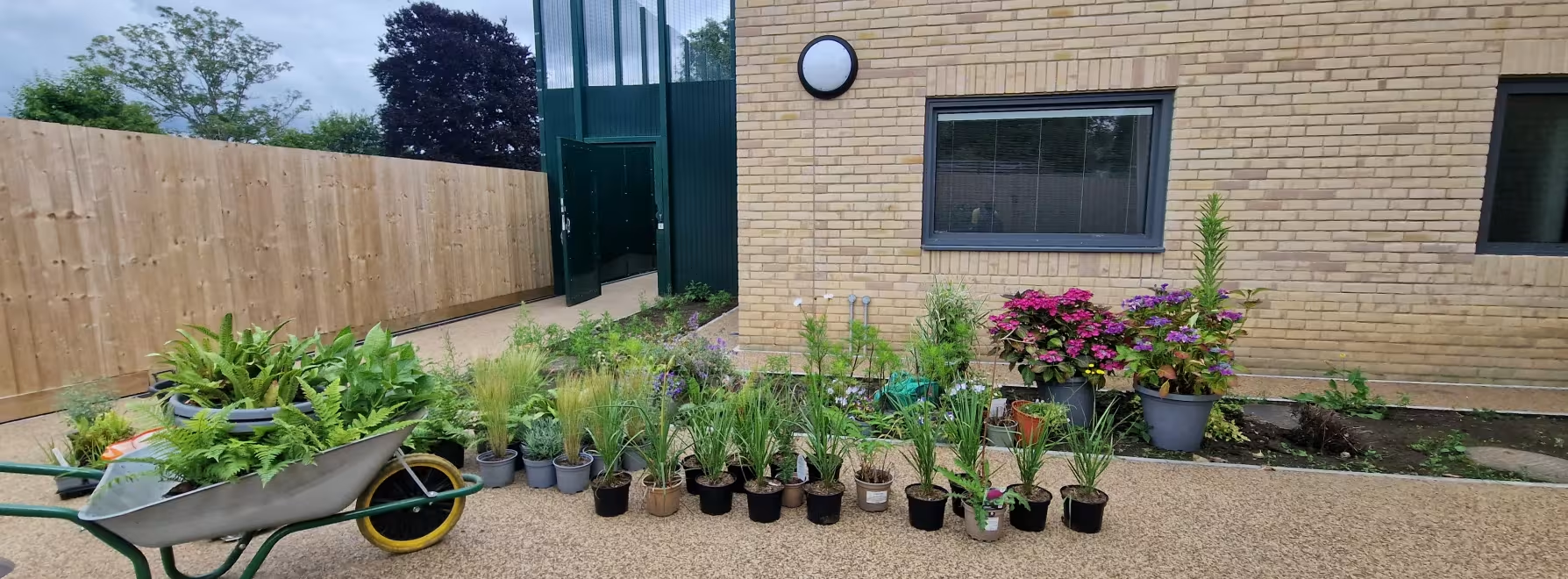
The study, carried out in partnership with Oxford Health NHS Foundation Trust, focused on the Meadow Unit at the Warneford Hospital, a psychiatric intensive care unit for young people experiencing acute mental health crises. Researchers worked with staff, former service users, and facilities teams to transform an underused outdoor area into a therapeutic horticulture garden designed to support wellbeing and recovery.
The project examined whether therapeutic gardening and biodiverse planting could be safely introduced into a highly secure clinical environment. The findings suggest that access to nature and involvement in gardening activities may help reduce stress, encourage reflection, and improve the ward environment for both patients and staff.
The research team argues that even the most secure units could begin to support ‘ecological collective flourishing’: caring for living systems that, in turn, help care for us. This theory is underpinned by what has been termed an eco-biomedical model, a framework whereby living environments and human-nature-health connections are explicitly at the heart of clinical design.
The study highlights the growing recognition of the role that access to nature can play in supporting mental health and wellbeing in a healthcare setting. Funded by the National Institute for Health and Care Research (NIHR) and Oxford Health Biomedical Research Centre, the findings were published in the journal Wellbeing, Space and Society.
You can read the full story and hear directly from Katrin about the findings in this University of Oxford article: Inviting nature into a secure ward for young people.