This page has a wide range of resources relating to the ‘Science and Religion in the Baptist World‘ project.

Podcast
Tim Middleton and Andy Goodliff present five episodes of a new podcast exploring Baptists and Science. The podcast will be released in January 2026.

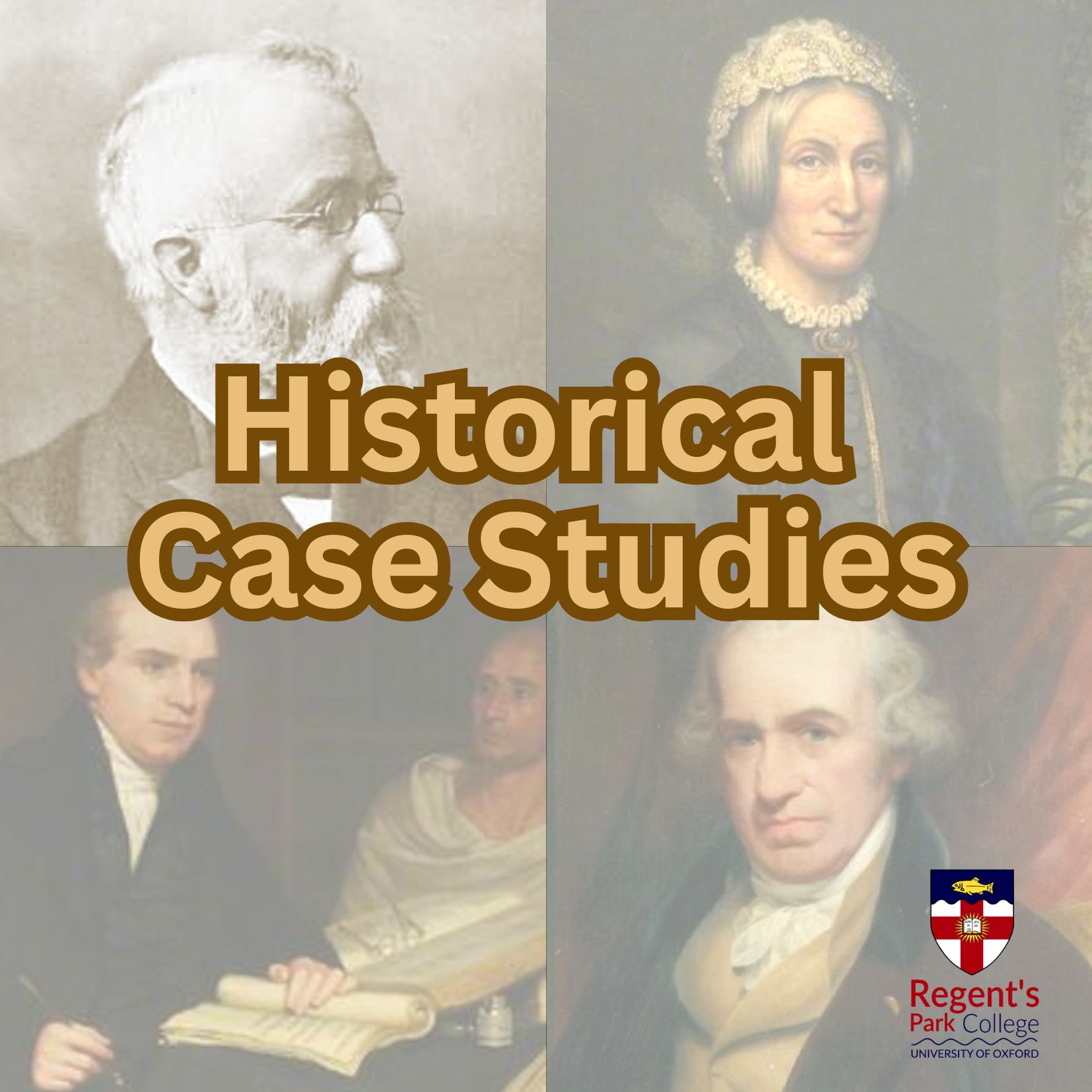
Historical Case Studies
Case Study 1 - Thomas Newcomen (1664-1729) - click to expand
- Born 1664, Dartmouth, Devonshire, into a nonconformist family
- 1685-88 set up a business as an ironmonger in Dartmouth
- 1704 his home was a meeting place for fellow Baptists.
- 1705 working on a steam engine
- 1710 he was leader of the Dartmouth Baptist community and a lay preacher
- 1712 first working piston-steam engine installed and working
- 1729 died in London and buried in Bunhill Fields
‘Newcomen was a modest man of great faith who conceived and built perhaps the most important initial contribution to the technological world we now inhabit and take for granted’ (Corfield, ‘Thomas Newcomen the Man’)
Why did these seventeenth century Baptists turn to engineering? It is hard to resist the conclusion that their theology may have something to do with it. (Richards, ‘Steam Leads the Way’)
References
- Brian Corfield, ‘Thomas Newcomen the Man’, International Journal for the History of Engineering and Technology 83.2 (July 2013)
- James Ford, ‘Thomas Newcomen: Inventor and Baptist Minister, 1663-1729’, Transactions of the Baptist Historical Society 2.2 (1911)
- Eric Preston, Thomas Newcomen of Dartmouth and the engine that changed the world (Dartmouth and Kingswear Society, 2012)
- A. Richards, ‘Steam Leads the Way: The Story of Thomas Newcomen’, Baptist Quarterly 30.5 (1984)
- T. C. Rolt, Thomas Newcomen: The Prehistory of the Steam Engine
Case Study 2 - William Carey (1761-1834) - click to expand
Pre-British empire (East India Company)
‘a boy-botanist’ — Samuel Carey, William Carey (1923), 22
‘to know and grow plants was with Carey a vocation and a passion. He was not a man of one Book but of two . . . His mission-work and his horticulture were twin expressions of one aim – to enrich men with God’s loveliest and best’ (Samuel Carey, 389)
Carey was elected to the Geological Society in 1823
Pioneer in the field of agriculture (Mondal, ‘Agricultural Initiatives’, 426)
Botany was an interest, it was money-making, and part of school curriculum
Improve the indigenous agriculture system
All thy works praise thee (Psalm 145.10), epigraph to Flora Indica
‘The great Author of nature has filled the world with so great a variety of objects that something presents itself, at every step, to the view of the most incurious observer, and either from its utility, its beauty, its singularity, or some other obvious property, forces itself upon his notice.’ Carey, ‘On the study of Nature’, The Friend of India, August 1825
Serampore – The Baptist Mission took the initiative to spread science through textbooks, pamphlets and lectures
‘The Serampore Royal Charter of 1827, bestowed by Frederick VI of Denmark, empowered the College to award its own degrees without restriction of subject. Indeed it specified that such degrees should be conferred only on those students ‘that testify their proficiency in Science’. This clause reflected William Carey’s personal conviction of the unique apologetic value of scientific knowledge (Stanley, BQ 2020, 19)
‘Since [Marshmann] described ‘the Hindoo system’ as resting on ‘the most absurd mistakes’ in history, geography, and science, sound instruction in these disciplines could be expected to undermine the structures of the religion. Chemistry had what is, to our minds, a surprising role to play in the conceptual battle with Hindu idolatry, for it would demonstrate that even sacred venerated matter was no more than matter: as all their objects of worship are formed of matter, the very experiments of this science will tend to shake belief in them altogether. Thus it is, in India especially, that knowledge may be made a most powerful auxiliary to religion, in the gradual dissolution of such a system of idolatry. It should be noted that chemistry – along with botany and agriculture (both taught by Carey) and geography – was duly an integral feature of the first curriculum of Serampore College.’ (Stanley, Baptist Quarterly, 2020, 21)
‘I must confess I have never heard anything more illiberal. Pray can youth be trained up for the Christian ministry without science?’ William Carey, quoted in Smith, The Life of William Carey, 1885 referenced in Farrer, William Carey, 110.
References
- Keith Farrer, William Carey: Missionary and Botanist (2005)
- Amrita Mondal, ‘Agricultural Initiatives of Sermapore Missionaries (1800-1840)’, Proceedings of the Indian History Congress 74 (2013), pp. 426-432
- Samuel Pearce Carey, William Carey (Hodder & Stoughton, 1923)
- Brian Stanley, The History of the Baptist Missionary Society 1792-1992 (T & T Clark, 1992)
- Brian Stanley, ‘The Vision of a Christian Higher Education for India: 200 Years of Serampore College History’, Baptist Quarterly 51.1 (2020)
Case Study 3 - Ellen Farrer (1865-1959) - click to expand
1891 graduated from the London School of Medicine for Women and the Royal Free Hospital. Sailed for India supported by BMS.
Bhiwani (106 miles west of Delhi)
‘Unchristianised and largely untouched by Imperial infiltration’ (Anderson, 168)
Career lasted until 1931
Honoured twice by the Indian imperial government for distinguished public service.
Died in 1959.
- Medicine or evangelism? Tension
‘medical work offered a way “to usefully and happily serve He who sent His followers out to preach the Kingdom of God and to heal the sick.’
Arrived with no language but immediately studied Urdu. Later able to translate two textbooks into Urdu.
‘Medical work a representation of Christian charity in action’ (Anderson, 181)
Her conviction of the superiority of western science and medicine was unshakeable (Anderson, 241). Her remarks on native civilisation are markedly patronising, although her intentions were entirely humane and compassionate’ (Anderson, 292)
Farrer was ‘glimpse of the human face of colonialism’ (Anderson, 289)
In 1934, Farrer gave an address responding to Re-Thinking Missions 1932 (Hocking Report)
Charter for Medical Mission is Christ’s command
- Essential part of the Christian witness
- Healing and preaching must go together
- Believes it is possible to evangelise patients in hospital but no coerce
- ‘those of us keen on the professional side of our work’
- ‘we cannot work miracles as our Master did, but by using in His Service the resources of modern medicine and surgery cures can be accomplished which seem to ignorant village folk little short of miraculous
- Hospitals provide more time to share the gospel and demonstrate divine love than district visiting.
- Provide opportunity as training institutions for Indian Christians as nurses, midwives . . . supports ‘the uplift and development of the indigenous Indian Church, of such training not only leads to an honourable means of livelihood in the service of the sick and suffering, but also supplies an excellent discipline for the formation of character and affords opportunities for evangelistic efforts among their own people.’
References
- Imogen Siobhan Anderson, A Mission For Medicine: Dr Ellen Farrer and India 1891-1933. Unpublished PhD, Durham, 1997.
- Fifty Years for Bhiwani Hospital: The Farrer Jubilee (1941)
Case Study 4 - George Grenfell (1849-1906) - click to expand
- 1873 enter Bristol Baptist College (aged 23)
- 1875 in Cameroon — an apprenticeship
- 1878 off to the Congo
- Based at Sao Salvador.
- Resigned from BMS in 1878 after getting his young housekeeper Rose pregnant. He returned to Cameroon and married her.
- 1884 Grenfell begins mapping Congo river aboard The Peace
- 1886 awarded the Gold Medal of the Royal Geographical Society
- 1891 appointed Commissioner by King Leopold to delimitate the boundary between Congo State and Portugal
- 1903 gives up his medals from Leopold II and resigns from Commission for the Protection of the Natives
- 1906 death
References
- George Grenfell, ‘The Upper Congo as a Waterway’, Geographical Journal (1902)
- H. L. Hemmens, ‘Grenfell of the Congo’, Baptist Quarterly 13.3 (July 1949)
- Harry Johnston, George Grenfell and the Congo (Hutchinson, 1980)
- ‘Obituary’, Geographical Journal 28.4 (1906)
- M. A. Smith, ‘Peace and Goodwill: George Grenfell on the Congo’, Baptist Quarterly 35.3 and 35.4 (1993)
‘These geographical labours were not allowed to interfere with Grenfell’s primary work as a missionary, to which he devoted himself with unflagging zeal to the last.
. . . Mr. Grenfell had from his boyhood taken a keen interest in geography, and this natural bent no doubt had a good deal to do with the precise direction taken by his life-work. He joined the Society in 1882, and watched with appreciation its efforts to improve the status of the subject in the schools of this country. In 1887 he was the recipient of the Patron’s Medal, given in recognition of his important services to geography during his long residence in West Africa.’
Obituary, The Geographical Journal 28.4 (1906):
‘While waiting for the arrival of engineers who were to reconstruct the steamer, Grenfell embarked on a preliminary voyage up the Congo “in a small steel boat. On this journey his talent for exploration revealed itself. He spent the time taking soundings and bearings, charting and mapping the river, visiting villages on its banks and noting sites for possible stations . . .
For the next two years-1884-1886, the Peace was used for exploratory work. In five extensive journeys it travelled 15,000 miles. On them Grenfell not only charted the main river for the thousand miles from Stanley Pool to Stanley Falls, but explored many tributaries which included the Mobangi, the Lefine, the Ruki, the Lomami, the Lulongo, the Buruki, the Juapa, the Kasai, the Lilua and the Kwa to the limit of navigation. Every part of each journey was carefully recorded. The map Grenfell made was 125 feet long and is so accurate that, to this day, it is used by captains of state and trading steamers.’
(Hemmens, ‘Grenfell’, 129)
‘the representatives of the Baptist Missionary Society have always been practical men, with whom science was, so far as they were able to serve it, a part of their religion.’ (Johnston, 10)
. . . the enormous amount of good that has been accomplished by Christian missions in Africa from a purely ethical standpoint and the gigantic contributions they have made to the store of the world’s knowledge in philology, in folklore, in first-hand studies of primitive people, in contributions to botany, zoology, geography, and map-making’ (Johnston, 12)

Conference Videos
Videos of some of the presentations from the two-day conference ‘Baptist Perspectives on Science and Religion’ held in September 2025
BPSR 01 - John Weaver
John Weaver – ‘An Overview of Baptist Contributions to Science’
BPSR 02 - Saptarshi Mallick
Saptarshi Mallick ‘William Carey and Botany’
BPSR 03 - Karen Smith
Karen Smith – ‘Ellen Farrer and Medicine’
BPSR 04 - Andrew Kaiser
Andrew Kaiser – ‘Timothy Richard’s use of science during his early years in China’
BPSR 05 - Sarah Qidwai
Sarah Qidwai – ‘Baptist Missionaries, Empire and Science’
BPSR 06 - Denis Alexander
Denis Alexander – ‘Biological Science: A Baptist Perspective’
BPSR 07 - Hannah Gray
Hannah Gray – ‘Environmental Science: A Baptist Perspective’
BPSR 08 - Andrew Steane
Andrew Steane – ‘Physical Science: A Baptist Perspective’
BPSR 09 - Alistair Ross
Alistair Ross – ‘Psychological Science: A Baptist Perspective’
BPSR 10 - Ernest Lucas
Ernest Lucas – ‘Biblical Studies and Science’
BPSR 11 - Ed Kaneen & Rosa Hunt
Ed Kaneen & Rosa Hunt – ‘Baptist Ecclesiology and Science’
BPSR 12 - David Gregory
David Gregory – ‘Covenant Theology and Science’
BPSR 13 - Richard Weaver
Richard Weaver – ‘Contemporary Mission and Science’
Forthcoming Book
We are looking forward to publishing a book that brings together many of these outputs in the near future. Watch this space!